The challenge that lies ahead will be to see if a truly decentralised Web 3.0 that has an open, diverse and inclusive ecosystem of value can break the monopolised thrall of Web 2.0 Techno-Feudalism.
What we expose ourselves to – where we shine the light of our attention/consciousness – shapes who we are in an ongoing process of self affirmation. It doesn’t matter whether we do it consciously or unconsciously, it is always happening. This has primarily happened spatially as all knowledge (culture) and memory traditionally forms and is placed in the space around us. This is represented cognitively in our brains in the Entorhinal cortex and hippocampus as the Entorhinal grid cells change physical shape constantly to reflect changes in the environments we inhabit.
As our attention and the culture surrounding us has migrated more and more into the virtual/digital online world, the same process continues albeit limited in physical space to the screen we use to interact with the online world. Those screens have become smaller and smaller and now this process primarily happens through mobile devices held in the palm of the hand.
As this is a relatively recent change that has occurred in the history of the human brain and behaviour the long term consequences of these changes are still not apparent. Personally I have noticed that the abstract concepts and their relationships that I am studying and contemplating via online mediums during the day manifest in my dreams at night spatially in physical scenarios that I can recall in the morning. Writing down these dreams and contemplating them I find helps me to understand the possible relationships between these concepts that I was struggling to understand fully during the day with my conscious mind alone. It’s like somehow the unconscious mind in the dream world is able to untangle the knotted ball of ideas so that they all inhabit their own space and can relate to each other from there.
Playing Minecraft online is an interesting exercise in training oneself to re-orientate in relation to the virtual world inside the screen and all of the other objects that appear both stationary and moving. It is different from how one orients oneself in the physical world of Gaia with all of her associated rhythms and cosmic relationships, like the geomagnetic field and the gravitational pull of the moon. As I am still in the process of orientating myself in the Minecraft world it takes a lot more effort to play it as there are so many things that need to be recalibrated. For example my motor control system for controlling my virtual avatar, how I move its arm etc. There is a process of adaptation that takes place within our cognitive systems as we adapt to using new online tools.
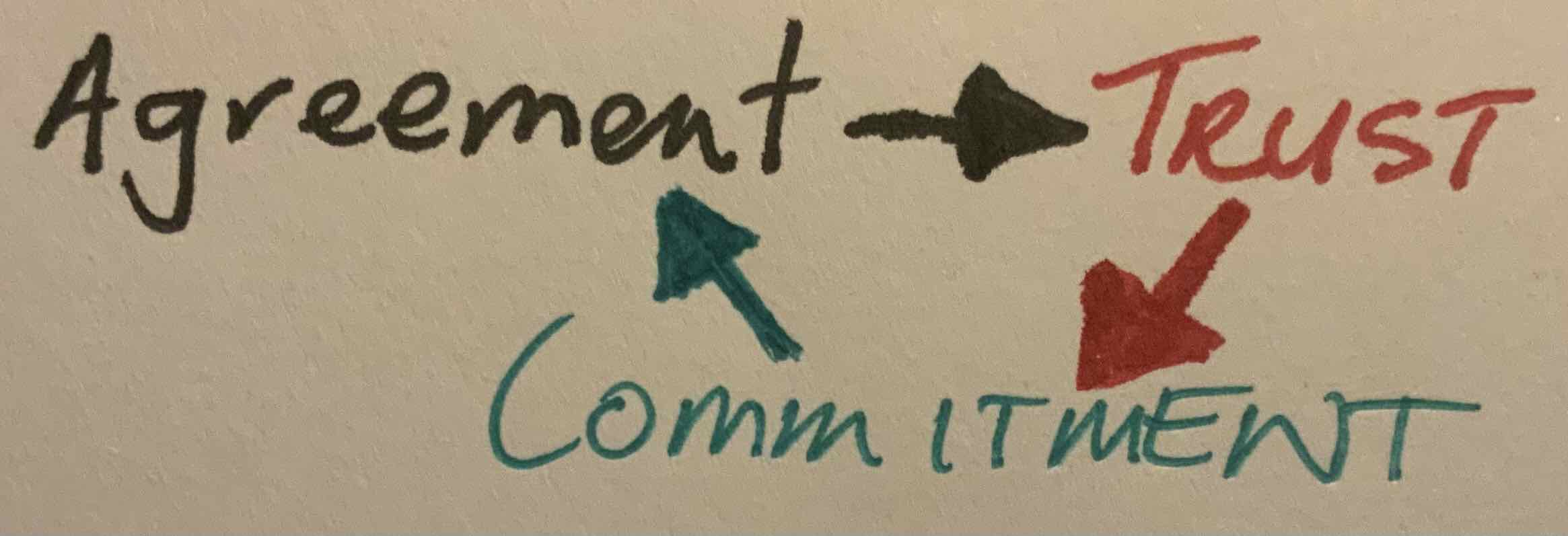
One thing that I have been thinking about a lot is how we relate to each other and how that process of relating is in constant flux. At the basis of how we relate to each other is agreement. The process by which we come to agreement with the people around us is always shifting, with there being accelerated periods particularly where new mechanisms of agreement are introduced.
With the advent and proliferation of the internet throughout the world one could now say that Gaia has an additional neural framework. This website exists in what we call Web 1.0, the internet and is built and hosted using WordPress open source software. As we publish onto the Web those thoughts and ideas now have a home in the global consciousness (intelligence) and become available for anyone to refer to. The tools that we use to navigate that global intelligence are generally shared across the culture that we participate in and provide somewhat of a framework for how we come to agree on the ever changing cultural norms. With Web 1.0 quite suddenly at least half the people in the world had some kind of access to that global intelligence and the tools used to navigate it and find bytes of information.
In the old cultures human communities were connected together via the natural world and its many languages, like birdsong and the weather etc. Now human communities are connected together via machines and the parameters and semantics that they share, so in this way Gaia suddenly has an additional global neural framework made up of humans and machines.
Then with Web 2.0 and the proliferation of social media networks and other primarily closed garden ecosystems like Apple, Amazon, Netflix, Google etc we suddenly had more sophisticated tools to create our online personalised ecosystems of bytes of information. Now we can curate our connections and relationships with other “real world” content creators completely within these closed digital gardens that are not interoperable at the content level. Activity can pass between these gardens but that is primarily facilitated by the underlying monetary system and its associated financial technology like payment systems and advertising mechanisms. With the main social media platforms like Instagram all the content published on these platforms becomes completely controlled by the platform and we have little control over the long term destiny of that data and also what it gets used for. The Facebook – Cambridge Analytica data scandal demonstrates some of the ways in which that data has been used.
Web 1.0 democratised access to information to a large extent globally. Web 2.0 while providing vastly more sophisticated and user friendly tools for creating content and sharing it, has significantly eroded the control that content creators have over their data. We have seen this process consolidate over 76% of global resources into the control of 10% of the global population; with 50% of the world’s population controlling just 2% of the resources. This has led some thinkers like Yanis Varoufakis to suggest that Capitalism is giving way to a new economic order which he calls Techno-Feudalism. So up until now throughout this process while access to information has been somewhat democratised the opposite has happened to value in the sense that value has been significantly monopolised.
What we choose to give our attention to, i.e what we follow and like on social media, we are effectively entering into agreement with, like saying “I agree to be influenced by this content”. Then the opaque algorithms that drive these platforms learn from our behaviour to provide a somewhat biased array of novel content designed to harvest more of our attention, and influence us further into a particular direction. These algorithms are owned and designed by corporations with the primary stated objective of harvesting and concentrating financial resources, which gives rise to the biases in the algorithms. Recently we have also seen how these algorithms have been weaponised in the global information wars between the corporate elites and the global south, with content that runs contrary to that endorsed by the corporate elites being suppressed.
Web 3.0 which is emerging at the moment has the potential to significantly democratise not only access to value, but also how we define value, with its promise of a truly decentralised financial system. This is happening in a multidimensional way: 1) increased access to mainstream mediums of exchange of value that are controlled by the Financial Elite; 2) and perhaps more significantly the ability to create and share our own representations of value. At the heart of Web 3.0 is the mechanism through which we reach consensus, more specifically how we reach consensus (agreement) about the state of the decentralised financial ledger that we are participating in. The challenge that lies ahead will be to see if a truly decentralised Web 3.0 that has an open, diverse and inclusive ecosystem of value can break the monopolised thrall of Web 2.0 Techno-Feudalism.
 A Radical Shared Economy
Leave a comment