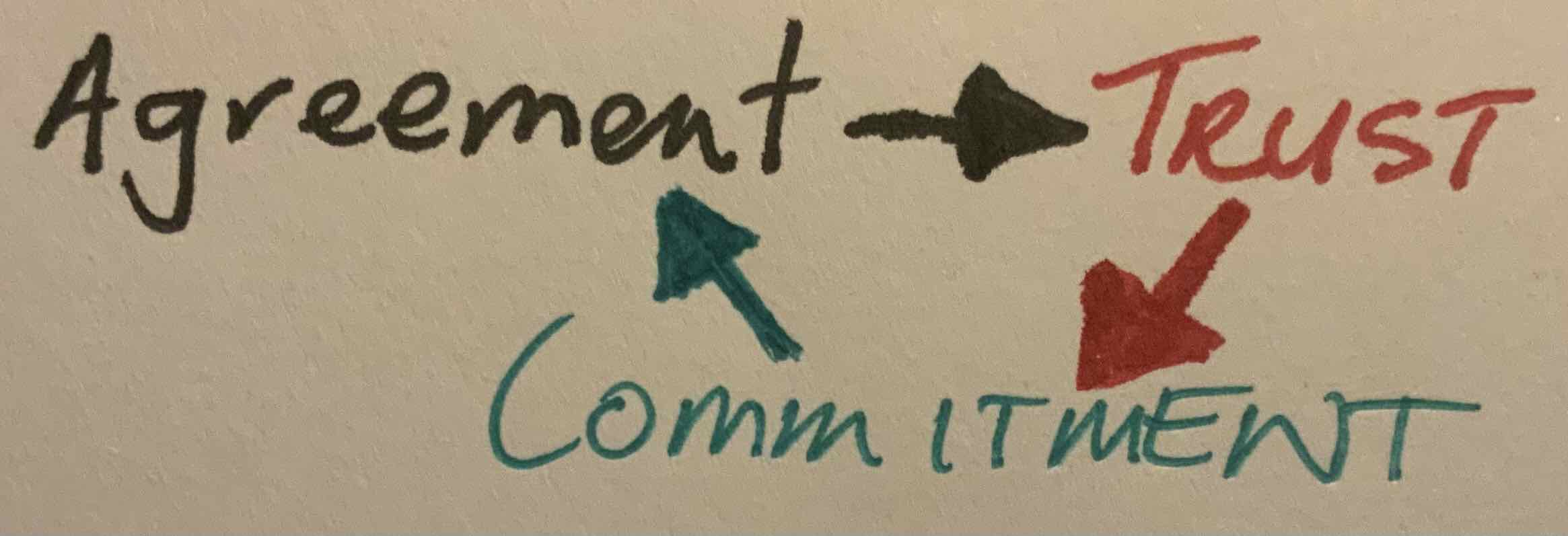
Given the current model of Web 2.0 social media platforms like Instagram is quite mature and well integrated into global popular culture, mirroring the model leveraging the logic of the decentralised secure Stellar Consensus Protocol could be a pathway to mainstream user adoption of the Stellar network.
Imagine an open source Web 3.0 social cooperation network built on the Stellar decentralised network, where the Stellar “Trust Lines” are utilised for the “Following Function” of the current Web 2.0 social media model. Each user profile is based on a Digital Commitment Voucher (DCV – see rules of the game pdf for more details about DCVs, aka unique digital asset), this is the goods or services that the user is committing to share with the online community.
This enables value to be linked to reputation and trust, which is very significant and allows for the de-commodification or decolonisation of value. In society today value has been captured by central banks and their commodified fiat currencies such as the Australian dollar, where almost anything can be bought with these fiat currencies. Whereas if we created this social network and enough people started using it then there could be a significant amount of value exchange taking place outside of the fiat currencies and within the social network.
The only currency associated with the network would be Lumens (XLM), where they act as a form of demurrage (rent paid for each piece of active state on the ledger), that is needed to secure the network against Spam attacks or a tendency toward centralisation of resources. XLM, due to the extremely low fees, would only constitute a very small fraction of 1% of the value exchanged on the network. The rest of the value takes the form of unique Digital Commitment Vouchers that are exchanged interchangeably in an open, diverse and inclusive ecosystem of value.
The network would reflect the Stellar Consensus Protocol (SCP) in how it operates through the agency of flexible trust which forms the basis of the social contract at the heart of the SCP. Utilising the “Trust Lines” to mimic the “Following Function” of current Social Media platforms, with the default of the network being to expose each user’s followers and who they are following or trusting with their trust lines – the same as Web 2.0 social media. Current Social Media platforms have a hierarchy of 3 broad layers of data that feed their commercially biased heuristics (they actually aren’t algorithms) These 3 layers in order of priority being:
- Following
- Likes, comments, interactions
- Basic attention, time spent looking at each thing.
Users are already well trained in behaving this way and have an intuitive understanding of how it works. People will then be able to understand the concept of “Trust Lines” in terms of the “Following Function”. You only follow other DCVs that you trust and therefore can exchange value with. If you no longer trust them you stop accepting their DCV and stop following their content, by withdrawing your trust line from their DCV. There could also be the option of still being able to follow their content but in a significantly downgraded way in terms of the heuristics (remember they r not algorithms) in this way when their reputation improves it will become visible more and then you can re-extend your trust line with them. I would speculate that these kind of trust lines become the most secure in the long term. As most people know if you have a friend that you fell out with at some point and then became friends again, there is usually a strong bond because some kind of healing has taken place in the relationship.
With all the trust lines that a user has with other user DCVs being exposed in their profile (as in Instagram and Twitter) users can monitor who other users are trusting (and also who is trusting the user) and adjust their trust accordingly. The media content that users post in their DCV avatar profile is used by other users to assess their reputation and decide whether they want to trust them and therefore exchange value with them in addition to being able to see who else trusts them.
“Trusting DCVs” is like “Following other users” and other people that have extended trust lines to your DCV are like followers. The DCV’s that you trust, you are happy accepting as payment for whatever goods and services are represented by your commitment (DCV) to the community. Trust lines could be the major signal that the open source content heuristics (not algorithms) for the network uses to serve content to your feed. The default could also be to expose each user’s portfolio of DCVs that they are carrying in their wallets, this then could provide the 2nd level signal to the content heuristics (these r not algorithms), kind of like “likes in instagram”, users could also flag to have the portfolio hidden or visible to specified groups of other users. In fact that could be the default across the network like the current web 2.0 model exposes all content and users choose which content they want to hide from who.
Trust requests i.e. when one user requests trust from another user but has not received acceptance yet could also be exposed or not. There are lots of possibilities for how it could play out with the community making key development decisions potentially using voting mechanisms like Neural Quorum Governance. And alternatively exposing trust requests could be a flag with the default being to expose and if users want to keep that confidential they could flag it, so then it becomes hidden. They could also just expose it to their trusted users and not to the general public. Given the current model of Web 2.0 social media platforms like Instagram is quite mature and well integrated into global popular culture, mirroring the model leveraging the logic of the decentralised secure Stellar Consensus Protocol could be a pathway to mainstream user adoption of the Stellar network.
The big game changer would be if everyone’s content data that they upload and share was stored in a decentralised storage system that they pay for using the same kind of fee structure that is being developed for state archival. Then everyone is also in control of their data. Basically whoever controls the secret key to the account controls all of the content data associated with the account as well as the DCVs (digital assets).
I guess the user interface would be a sophisticated wallet, where the unique Digital Commitment Voucher for each account is the key identifier and portal to the digital content exposing the reputation of the Digital Commitment Voucher. I feel like you could keep on going quite easily, but I think that is a good start…
But I will say that in its latest sanitised version “nexus” Yuval Noah Harrari’s zionist bubble has got blockchain wrong. So please don’t let him know that the Stellar Consensus Protocol can withstand Sybil attacks (51%) and is also Byzantine fault tolerant.
In summary:
- Each user avatar takes the form of a Digital Commitment Voucher (DCV aka digital asset)
- You follow other people by extending a trust line to their DCV and they do the same to follow you. But you can only receive into your wallet other DCV that you trust or follow. When someone follows your DCV they can receive it in payment – but this has nothing to do with you being able to receive their DCV, you have to follow (extend a trust line to) their DCV to be able to receive it as payment.
- Each user could customise their open source heuristics (not algorithms) for serving them content with flags defining which variables it should prioritise.
- Each users data is secure and controlled by them through their private key. This allows each user to control who accesses their data. The fee structure for accessing data could be executed in micropayments reflecting the fee model of the state archival protocol.
- A user could specify who could access their data for what fee, they could have a tiered system:
- Access for free – Data owner covers the micro fees
- Base fee access – the user accessing the data pays the base fee
- Access for additional fees – The data owner could specify any additional fees they want to charge to specified users to access the data, for example AI bots.
- The default of the network would be to expose all user information i.e. Followers, Following, Portfolio of DCV’s, Content posted. Then users could use flags to hide specific things from specific groups if they so choose i.e. hiding all data content from Bots.
Keybase kind of used this same logic I think that’s why I liked it it was quite intuitive. It doesn’t seem like the Keybase code base is being maintained anymore. I know there was some brief discussion back in 2021 about seeing if they would open source the code. That could provide an interesting leg up if it were possible to get it open sourced especially now that it seems redundant.
 A Radical Shared Economy
Leave a comment