
If you don’t know who Bukini is you soon will!
I have been dancing with Sanskrit and the concepts of Kashmir Shaivism ever since I first went to India in 1994 and studied it in Gurudev Siddha Peeth, just outside of Mumbai. I have revisited it numerous times with bursts of study, practice and inspiration and at the same time I now realise it has always been with me tremoring underneath my skin like moths.
Shambavopaya (Shiva Sutras 1 to 5).
(Revealed to Vasugupta with Kshemeraja’s Vimarsini)
Chaitanyam Atma
Jnanam Bandhah
Yonivargah Kalashariram
Jnanadhisthanam Matrika
Udyamo Bhairava
I am consciousness, which is absolute freedom (absolute freedom in the form of shimmering consciousness is the self)
Knowledge is the string that binds us to things
The manifest worlds emerge from the lips of the goddess
Knowledge resides in the power of the word
Bhairava appears in a flash of light
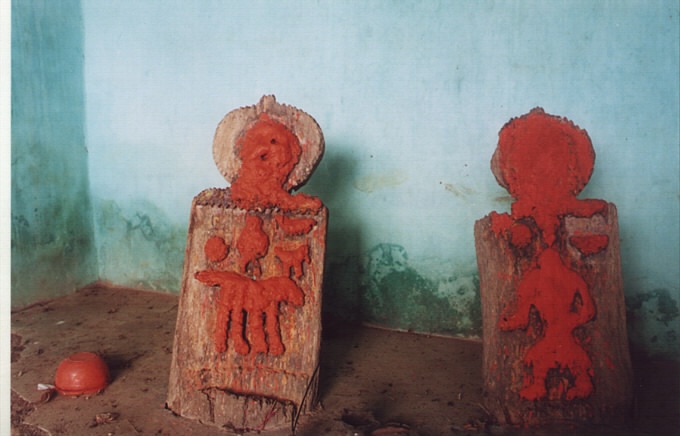
Lalita Devi identifies with Kumari – the living goddess – and shares the visualisation of a sparkling red ruby, fingernail sized in the heart that expands and fills the body with the scintillating red presence of the goddess. All the organs, arteries, bones and muscles become sparkling red ruby.
“The presence of the goddess in the body through the welling up of the heart” (Lalita Devi, Daniel Odier “Crazy Wisdom of the Yogini)
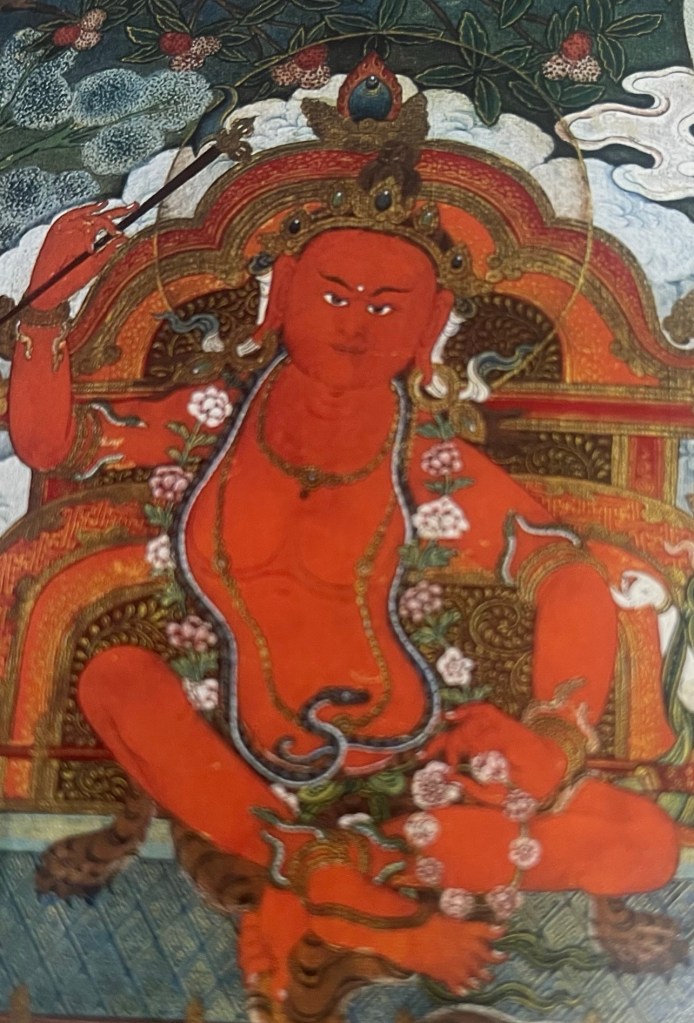
The first 5 karikas or verses of the siva sutras outline the elliptical nature of the mystical path. Starting with everything is consciousness even my individual soul and that is Svatantra absolutely free. Then defines the mechanism as knowledge, which is the same as the object of the knowledge i.e. as the knowledge inhabits our consciousness we identify with the object of that knowledge. Then goes onto explain manifest reality as emanating from the lips of the goddess. Further elaborating how this happens through the power of the word. Then uses that very same power of the word to return to the beginning and reveals bhairava in a flash of light Udyamo bhairava.
It is elliptical in the sense that this cycle continues ad infinitum – with it going out and identifying with some thing then returning to source and on and on and on … This is the only permanence; the constant arising and dissolving of things. As we are filled with the presence of the goddess this expression becomes completely free and unbound by limited knowledge. Through not identifying with any one thing we can see every thing as it really is.
Aham attatva svatantra; I am independent freedom, experiencing all the things as they really are; different manifestations of the goddess i.e. the same as my self, not separate. Complete non-dual ontology.
Nitya hrdaya svarupa; expression of the essence of the heart
Khechara; roaming in the heart space.
Gaya svaha; in service of the goddess.
As the sutras suggest language, the power of the word, is at the heart of how we experience manifest reality. To imbibe the cultural milieu of Central Asia and India in the 10th century imagine that you and everyone around you is speaking and thinking in Sanskrit.
Kashmir Shaivism and Mahamudra
P.T. Shrinivas Iyengar in his book “The Shiva Sutra Vimarsinii of Ksheemaraaja” (1994) says that “The Shiva-Sutras ‘discovered’ by Vasugupta is the last of a series of many anonymous works on the Shaiva Tantra known to us only by sundry quotations, e.g., Vijnaana Bhairava”
“It is the first of the series of works which expound the Kashmiri Shaiva School which was founded in the tenth century of the common era, and which is yet alive. The first faint adúmbrations of the Shaiva Tantra are found in the Taittiriiya Yajur-Veda, but it developed into an organised system of beliefs and practices in South India in the earlier centuries of the common era when the Shaiva as well as the Vaisnava Tantra became formidable rivals of the prevailing BauDDha, which had lost its pristine purity of an ethical code and degenerated into an elaborate Tantra.”
The Rudram: consisting of the Namakam and Chamakam, which is probably the most popular and significant Vedic songs sung today comes from the Taittiriya Yajur-Veda. Swami Muktananda says this “Shri Rudram is considered to be the cream of the supreme Vedas. It is a symbolic representation of all the philosophies. It corroborates the immanent and transcendent aspects of God(dess) taught in Shaivism. The Rudram is originally from the Krishna Yajur Veda, which is popularly known as the Taittiriya Samhita. The Shiva Panchakshari Mantra (Om Namah Shivaya) is the heart of this section. Therefore , this has been used in daily worship, japa, and homa from ancient times.” It is a hym in dedication of the many names of Shiva. Many consider that Shiva is not mentioned in the Vedas, however Shri Rudra is the elemental predecessor of the Shiva that emerged in the Puranic age. I sing it along with the Gaya Gita quite regularly. I have found singing these songs regularly in praise of Bhairavi has profound affects on one’s being. The power of the word repeated with love and devotion to the goddess. In the last few years of his life Swami Muktananda studied the Vijnana Bhairava intently and the last thing he did before he died was to visit Swami Lakshman Joo in Kashmir one of the last 20th Century masters of Kashmir Shaivism.
Kashmir shaivism is a form of bhairavi worship that is egalitarian with woman especially revered because of their adept. The teachers were the dakinis like Niguma who taught Naropa in the 11th century of the common era. Naropa was one of the founders of vajrayana Buddhism that travelled throughout the Himalayas particularly Tibet. Saraha another one of the earlier founders of vajrayana Buddhism in the 8th century is particularly renowned for developing the Mahamudra. Like Matsyendranath, Saraha spent quite a bit of time in east India and was taught by Dakinis. His most famous teacher was The Arrow Making Dakini.
From Wikipedia “Saraha is normally shown seated and holding an arrow (Skt. śaru). It is from a mature nameless woman, often called the Arrow Smith Dakini or the Arrow Making Dakini, who was Saraha’s teacher and consort, that the typical iconography of Saraha holding an arrow emerges. Some versions of their meeting say that Saraha saw the Arrow Making Dakini in a vision and thus was wandering here and there, searching her out. Some say they met at a crossroads,[5] while other versions say that it was in a busy marketplace where she was selling her arrows.[6][7]
Whether they meet in a marketplace or a crossroads, it is this woman’s intense concentration and spiritual instructions to Saraha that are transformative. When he finds her, Saraha inquires about what she is doing. Her reply to him is pith and direct: “The Buddha’s meaning can be known through symbols and actions, not through words and books.”[8]
The Arrow Making Dakini then explained the symbolic meaning of the arrow to him using the elusive tantric twilight language that is common to Dakini teachings. It is said, that in this moment, Saraha fully realized the state of mahamudra and at that moment he said the single syllable “da.” This is a play on the sound of this word, which can mean either “arrow” or “symbol” (dadar or mda’ dar in Tibetan). Saraha then recognized the wisdom Dakini in front of him, abandoned his studies and monastic vows, and moved to a cremation ground with her to practice[9][10]”
Saraha literally means the one who shot the arrow. In the great tradition of Mahamudra she shoots the arrow of non-duality into the heart of duality.
Gaya Gita (song of the goddess) – 182 Slokas
The Gaya Gita, a song about goddess worship taken from the skanda purana, is a dialogue between Parvati and shiva. In it shiva imparts to Parvati the secrets of goddess worship. When we sing the gaya Gita we naturally embody the goddess Parvati and in this way receive the secrets of goddess worship.
From wikipedia As per Skanda Purana, Vyasa had a wife, Vatikā (also known by the name Pinjalā), daughter of a sage named Jābāli. Their union produced a son, who repeated everything what he heard, thus receiving the name Shuka (lit. Parrot).[5][6][7]
Other texts including the Devi Bhagavata Purana also narrate the birth of Shuka but with drastic differences. Vyasa was desiring an heir, when an apsara (celestial damsel) named Ghritachi flew in front of him in the form of a beautiful parrot. He discharges his semen, which fell on some sticks and a son developed. This time, he was named Shuka because of the role of the celestial parrot.[8]
A slightly different story is told in other scriptures. One day, the god Shiva prepares to narrate the secret of goddess worship to his consort-goddess Parvati, at her behest. He orders all other beings in the vicinity to leave. Shiva closes his eyes and instructs Parvati to make a humming sound to indicate her attention. At the very moment of Shiva’s instruction, a parrot is born from its egg and becomes an audience to the secret divine conversation. Shiva starts his narrative and Parvati makes the sound, but mid-way falls asleep. The parrot, however, continues to make the humming sound so Shiva continues. After completely revealing the secret, Shiva finds Parvati asleep and realizes that another being has eavesdropped. He notices the parrot and chases to kill him. The tiny parrot flies into a nearby forest and enters into the womb of Vyasa’s wife through her mouth when she was yawning. Shiva arrives and demands that the parrot comes out, but Vyasa persuades him to leave the parrot as if he truly knew the secret, it was no use killing it as it would be immortal. Then Vyasa asks the parrot to come out, but it refuses, stating that if he comes out, he will be termed as Vyasa’s son and he does not want any attachment, and wants only moksha. This continues for 12 years and it makes Vyasa’s wife bear the pain, as the parrot is growing in her womb as a child for all those years. Vyasa prays to the god Vishnu to help his wife. Vishnu, who was present on the earth as Krishna, arrives. Krishna assures the parrot that no one would kill him and he would be incapable of attachment and eligible for moksha. The parrot then comes out in a human form and is named “Shuka” (Sanskrit for “parrot”). He then recounts what he heard while listening to Shiva describe how he worships his goddess Parvati in the form of the Gaya Gita.
Once, when following his son, Vyasa encountered a group of celestial nymphs who were bathing. Shuka’s presence was such that the nymphs did not consider him to be a distraction, even though they were naked, but covered themselves when faced with his father.[10][11] Shuka is sometimes portrayed as wandering about naked, due to his complete identification with the goddess.
“The Skanda Purana says that once upon a time a demon named Durga threatened the world. Siva requested Parvati to slay the demon. Parvati then assumed the form of a warrior goddess and defeated the demon, who took the form of a buffalo. Thereafter, Parvati was known by the name Durga” (pg4, “The Goddesses’ Mirror” by David Kingsley 1989). This shows the pre-immanence of Parvati in her relationship with Shiva, they are one and the same, it is the form of the shakti that brings about the manifest world. Yonivargah Kalashariram.
In the Gaya Gita, Shuka is the bard (Suta) recounting the secret meeting between Bhairava and Bhairavi where Bhairavi requests Bhairava to describe how to worship the great goddess Gaya (holy centre). Bhairava sings the song of the goddess Gaya to show Bhairavi how he worships her.
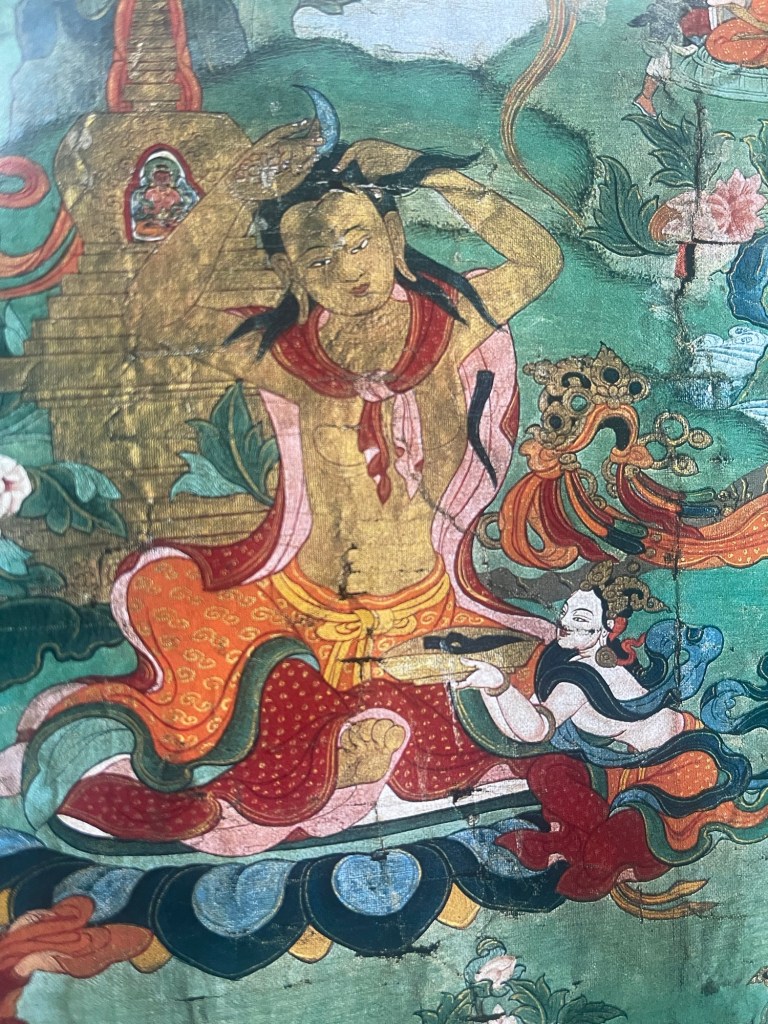
Then the Gaya Gita tells the story of the Tibetan Buddhist painting of Siddhartha entering the mendicant phase of his life. They say he is cutting his wild hair with his knife but the knife blade is really the crescent moon that he is brushing through his wild hair. Her breast is cupped showing how Bhairavi and Bhairava are the same. A murti of the devi sits above and behind him meditating on a lingam in her lap. At the same time the Devi is making the offering to Shiva. You can see his third eye, lingam and yoni all semi hidden underneath his cupped breast.
The Gaya Gita I have rendered from Swami Muktananda’s Guru Gita, which he extracted from the Skanda Purana. I have simply changed the 2 syllables Guru to Gaya throughout the Sanskrit text and have made some changes to Muktananda’s translation. Verse 17 explains how Guru is Gaya (a holy centre). I have made this change to avoid the emphasis on a physical human guru that Muktananda made. My intention is rather to restore what I feel is the true rendering as Mahamudra goddess worship in the tradition of Ardhatryambaka, Sahajanandabhairava, Atisa, Laksminkara, Mahasukhasiddhi, Kamalasila, Kanha, Niguma, Sukhasiddhi, Lalita Devi and countless other mostly nameless dakinis, Konkanamba, Matsyendranath and Saraha. Daniel Odier outlines this Kashmiri Mahamudra tradition in “Crazy Wisdom of the Yogini” (2021). With Gaya representing the essential goddess of life, of consciousness, the holy centre of all awareness, the centre of the circle of life, of the wheel of energies and Lore.
In this way, in the first 10 stanzas Shuka recounts how Parvati requests Shiva to reveal the secret of how he worships her:
Suta said: “On the beautiful summit of Mount Kalaish, Parvati asks: Om salutations O god o lord of lords o benevolent one o cosmic principle of the universe please share with me the knowledge you have gained from the goddess. Please share with me the knowledge of Gaya. Please explain how the embodied soul becomes one with Brahmin (absolute reality).
Then Shiva replies: O goddess you are my very self out of love for you I will tell you this, no one has ever asked this question before which is a boon to all. This knowledge is difficult to obtain in the 3 worlds. Listen and I will share it with you. Brahman is nothing other than Gaya O beautiful one, this is the truth. This is the truth.
All of the scriptures bring about in this world the downfall of those minds who are deluded. Those people are fools who engage in sacrificial rites, vows, penance, japa, charity and also pilgrimages without knowing the Gaya principle Gayatattvam . Gaya is not different from the conscious self without doubt this is the truth. This is the truth. Therefore wise people should make an effort to seek her.”
To understand Gayatattvam – the gaya principle – think of bubbles. Every point of awareness is a bubble with Gaya the one who perceives at the centre of the bubble.
The skirts of the Himalayas
The oldest surviving copy of the skanda purana (today a living text) in the Kathmandu Library has been dated to 810 CE. The text gives quite detailed geographical and technical information about pilgrimage routes and sites in andra Pradesh, which makes some scholars think the text must have been around in the 4th and 5th centuries of the common era. Matsyendranath’s samadhi is in Patan in the Kathmandu valley. Daniel Odier considers Konkanamba and matsyendranath brought the knowledge of bhairava and the kaula tantra to Kashmir from assam via Nepal. He says the following in his Preface to his book “The royal path of Shakti” (2023):
“The Kaulajnananirnaya Tantra of Mahasiddha Matsyendranath is the pivotal tantra that marks the transition from the magic and erotic tradition of ASSam to the refined philosophical tradition of the great Kashmiri masters Somananda, Abhinavagupta, Kallata, and Utpaladeva, spanning the period from the ninth and the tenth centuries up to the poetical flowering of Lalla in the fourteenth century.
The arrival of Matsyendranath in Kashmir and Nepal and the transmission of the Kaula Way, the Path of Shakti, are considered fundamental by Abhinavagupta. he pays homage to the Mahasiddha in the first chapter of his monumental Tantraloka, where he writes: ‘May Matsyendranath be auspicious for me. It is he who cast the net, the net steeped in red, crisscrossed with knots and gaps, that extends and stretches to all locations.’
What is notable in the Kaulajnananirnaya Tantra is that he also points out a connection, a continuation with the ancient Shaivism of the Indus Valley. This connection is the preeminence of the Yoginis and of respect for the feminine in all its forms – whether it be human, vegetable, or animal, such respect being essential to the wish for union with all that is.”
The so called skirts of the Himalayas from Kashmir and Oddiyana (swat valley) in the north west to assam in the south east and everything in between was a regular thoroughfare of goddess worship in the form of the mahamudra tradition between the early part of the common era up until the 13 and 14th centuries when the moguls appeared (practically 1000 years;). Kashmir in particular Oddiyana was known as the magical land of the dakinis. It lay at the crossroads of the old silk trade routes linking Persia with India and China.
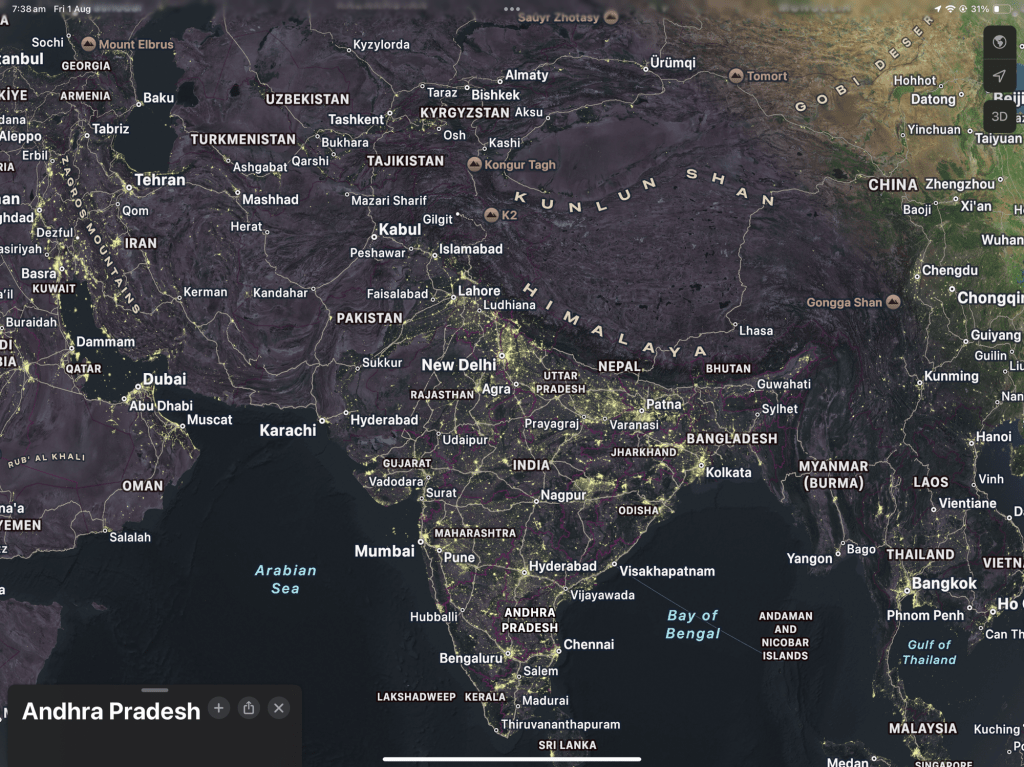
The four basic texts from this period are:
- The Kaulajnananirnaya Tantra of Matsyendranath, 7th or 8th century written in Assam
- Shiva Sutras of Vasugupta, first half of 9th century. 108 slokas
- The Spandakarika of Vasugupta or Kallata his student, 9th century. 52 slokas
- The Pratyabhijnahrdayam of Ksemaraja, 10th century. 20 slokas
The last 3 all come from Kashmir (Oddiyana). The 13th century Sufi poet Rumi lived in the Oddiyana region of current day Afghanistan. The Persian Sufi poet Hafez lived at the same time as Lalleshwari the famous kashmiri mystic poet and Nizamuddin the Sufi saint from the Delhi sultanate in India in the 14th century and they represent the culmination of this period. It is easy to see how these mystical traditions flourished in that time with both Islamic and Hindu influences.
When I was in Delhi I visited Nizamuddin’s Khanqah and “Chirag Delhi” where his esteemed student Sheikh Nasreddin is buried. Sheikh Nasreddin’s father and grandfather were pashmina traders from Oddiyana and he didn’t listen to Sema. Silence roared in the place, the felt presence was tangibly palpable, and I automatically fell quivering into a deep heart centred meditation that was irresistible. (From Wikipedia) “Nizamuddin Auliya, like his predecessors, stressed love as a means of realising God. For him his love of God implied a love of humanity. His vision of the world was marked by a highly evolved sense of religious pluralism and kindness.[5] It is claimed by the 14th century historiographer Ziauddin Barani that his influence on the Muslims of Delhi was such that a paradigm shift was effected in their outlook towards worldly matters. People began to be inclined towards mysticism and prayers and remaining aloof from the world.[6][7][8]”
“Nizāmuddīn lived at various places in Delhi, before finally settling down in Ghiyaspur, a neighbourhood in Delhi undisturbed by the noise and hustle of city life. He built his Khanqah here, a place where people from all walks of life were fed, where he imparted mystical experience to others and he had his own quarters. Before long, the Khanqah became a place thronged with all kinds of people, rich and poor alike.
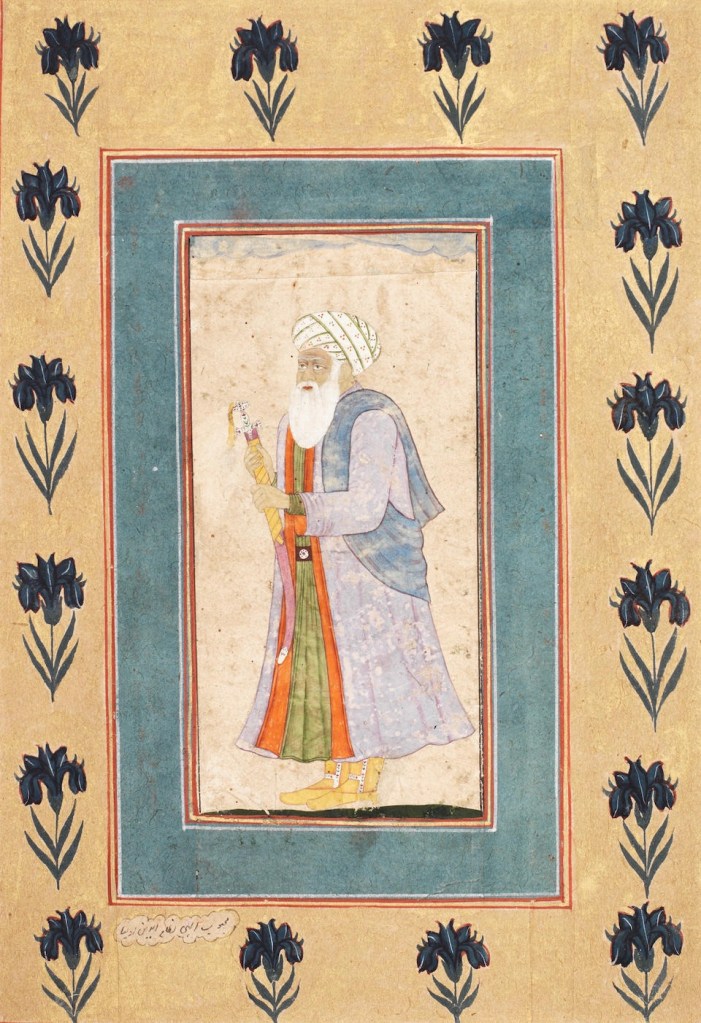
Many of his students became quite renowned, including Shaikh Nasiruddin Chirag Delhavi,[11] and Amir Khusro,[10] noted scholar/singer, and the royal poet of the Delhi Sultanate.”
Clarry Higham
Pratyabhijna-hrdayam – the heart of the secret seed of recognition (by ksemaraja 10th century CE)
I have extracted the Sanskrit transliteration and the corresponding English translation for each of the 20 sutras from the Pratyabijnahrdyam from Swami Shantananda’s (The Splendour of Recognition). My objective is to gradually render a new English translation with a fusion of Swami Shantananda’s work along with Daniel Odier’s translation and Jayadeva Singh’s translation.
1) citih svatantraa vishva-siddhi-hetuh
Consciousness, in her freedom, brings about the universe
2) svecchayaa svabhittau vishvam unmiilayati
By the power of her own will she unfolds the universe upon a part of herself
3) tan naanaa anuruupa-graahya-graahaka-bhedaat
The illusionary multiplicity of the universe appears through the relationship between subject and object.
4) citi-samkocaatmaa cetano pi samkucita-vishvamayah
The experiencer whose consciousness is contracted, perceives the universe in its contracted form
5) citar eva cetana-padaad avaruudhaa cetaya-samkocinii cittam
Consciousness appears limited due to identification with the object present in consciousness.
6) tanmayo maayaa-pramaataa
The contracted consciousness that identifies with the object is still consciousness.
7) sa caiko dviruupas trimayash caturaatmaa sapta-panncaka-svabhaavah
But when the consciousness appears dual (subject and object) and when this duality is covered by the veil of illusion, the consciousness is fragmented more and more and it takes the form of the 36 tattvas.
8) tad-bhuumikaah sarva-darshana-sthitayah
Thus, all philosophical theories appear as roles played by the absolute consciousness.
9) cidvat tac chakti-samkocaat malaavrtah samsaarii
When knowledge, desire, space, time and the power of realization are limited by the individual consciousness,
Shakti is limited.
10) tathaapi tadvat pannca-krtyaani karoti
Even then, the transmigratory soul performs the five acts like Gaya
11) aabhaasana-rakti-vimarshana-biijaavasthaapana-vilaapanatas taani
These five acts take place in the form of illuminating the object, enjoying it, knowing it, planting a seed of limiting memories, and dissolving those limitations.
12) tad-aparijnaane svashaktibhir-vyaamohitataa samsaaritvam
The condition of a transmigratory soul is delusion, brought about by her own powers when he is not fully aware of that (her authorship of the five acts).
13) tat-parijnaane cittam-eva antarmukhii-bhaavena cetana-padaachyaarohaat citih
Opening to this knowledge the limited Self becomes the absolute Self.
14) citivahnir avarohapade channo’pi maatrayaa meyendhanam plusyati
The fire of the absolute consciousness burns; it consumes every fragment of knowledge and object
15) balalaabhe vishvam aatmasaat karoti
This power of recognition of the universe’s real nature is extended to everything.
16) cidaananda-laabhe dehaadisu cetyamaanesv api cidaikaatmya-pratipatti-daardhyam jiivanmuktih
Attaining happiness is to realize that absolute consciousness is our true nature.
17) madhya-vikaasaac cidaananda-laabhah
Expanding the centre (Gaya) makes everything glow with awareness.
18) vikalpaksaya-shaktisamkocavikaasa-vaahacchedaadyanta-kotinibhaalanaadaya ihopaayaah
In this regard, the means for expansion of the centre are dissolution of thoughts, contraction and expansion of one’s power, cessation of the flow (of the incoming and outgoing vital energy), awareness of the point at the beginning and the end. This is Gaya.
Yoga is practiced through concentrating on the heart, through the return from mental formations and perceptions to space, through continuous perception of the spatiality hidden underneath the mental forms and perceptions, through the constant quivering of Kundalini, the Samadhi in Reality, the perpetual return to the Unknown through the breath and mantras, the circulation of breath from heart to heart.
19) samaadhi-samskaaravati-vyutthaane bhuuyon bhuuyash cid-aikyaamarshaan nityodita-samaadhi-laabhah
The permanent attainment of samadhi is established by contemplating one’s identity with Consciousness again and again in the state following meditation, which is full of the imprints of samadhi.
20) tadaa prakaashaananda-saara-mahaamantra-viiryaatmaka-puurnaahantaaveshaat sadaa sarva-sarga-samhaara-Kari-ninja-samvid devataa-cakreshvarataa-praaptir-Bhavatiiti shivam
Then, by entering the sacred quiver of reality, one attains mastery over the wheel of the deities of Consciousness that carry out all manifestation and reabsorption. This is Shiva.
Shiva is Gaya.
Spanda Karikas – Song of the Sacred Quiver (written down by Bhatta Kallata student of Vasugupta (9th century CE)
I would also like to do the same for the Spanda Karikas with a fusion of Daniel Odier’s translation and Jaideva Singh’s transliteration of the Sanskrit.
- Yasyonmesanimesaabhyam jagatah prlayodayau Tam Shakticakravibhavaprabhavam Shankaram stumah Gaya opens her eyes and the universe is reabsorbed in pure consciousness; she closes them and the universe is manifested within her.
- Yatra sthitam idam sarvam kaaryam yasmaacca nirgatam Tasyaanaavrtaruupatvaan na nirodha sti kutracit The sacred quiver, the very place of creation and return, is completely limitless because its nature is formless.
- Jaagradaadivibhede pi tadabhinne prasarpati Nivartate nijaannaiva svabhaavaadupalabdhrtah Even within duality, the tántrica goes straight to the no dual source, because pure subjectivity always resides immersed within his own nature.
- Aham sukhi ca duhkhi ca raktashca ityaadisamvidah sukhaadyavashaanusyuute vartante nyatra taah sphutam All the relative notions tied to the ego rediscover their peaceful source deeply buried under all the different states.
5. Na duhkham na sukham yatra na graahyam graahakam na ca na caasti muudhabhaavo pi tadasti paramaarthatah
In the absolute sense, pleasure and suffering, subject and object, are nothing other than the space of profound consciousness. (DO)
Wherein neither pain, nor pleasure, nor object, nor subject exists, nor wherein does even insentiency exist – that, in the highest sense, is the Spanda principle.(JS)
6. yatah karana-vargo yam vimuudho muudhavat svayam Sahaantarena cakrena pravrtii-sthiti-samhritih Labhate
7. tatpryatnena pariksyam tattvam aadaraat Yatah svatantrataa Tasha sarvatreyam akrtrima
To grasp this fundamental truth is to see absolute freedom everywhere. Thus, the activity of the senses itself dwells in this fundamental freedom and pours forth from it.(DO)
The (Spanda) principle should be examined with great care and reverence as it pours forth taking pleasure in beholding objects and then withdraws again back into itself.
8. Na hicchaanodanasyaayam prerakatvena vartate Api traatmabalasparshaat purusastatsamo bhavet
9. Nijaashuddhyaasamarthasya kartavyesv abhilaasinah Yadaa ksobhah praliiyeta tadaa syaat paramam padam
Therefore, the person who rediscovers this essential sacred quiver of consciousness escapes the dim confusion of limited desire. Liberated in this way from the multiplicity of impulses tied to the ego, she experiences the supreme state.(DO)
10. Tadaasyaakrtrimo dharmo jnatvakartrtvalaksanah Yatas tadespsitam sarvam jaanaati ca karoti ca
Then the heart realises that the true innate nature is both the universal agent and the subjectivity that perceives the world. Thus immersed in understanding, it knows and acts according to its desire.
Then will flash forth her innate nature.(JS)
51. Yadaa tvekatra samruudhas Tadaa tasya layodayou Niyacchan bhoktrtaam etii tatascakreshvaro bhavet
But when the tántrika becomes established in the sacred shiver of reality, she liberates the flow of manifestation and return, and in this way takes pleasure in the universal freedom, as Gaya in the hub of the wheel of energies.
The goddess Tripura said:
The great mantra that I use is the intuition of my innate freedom.
From “Yoga Spandakarika” by Daniel Odier (2005).
Lalla 14th century Kashmir (Lalleshwari) said:
Tantric practices set aside
All that remains is the quivering of OM.
The sound having gone, all that remains is thought.
Thought having vanished, nothing is separate any longer.
The void returns to the living space
Of pure awareness of the Self.
From “Crazy Wisdom of the Yogini” by Daniel Odier (2021)
Nartaka Atma
The self is the Dancer
Nataraja
 A Radical Shared Economy
Leave a comment